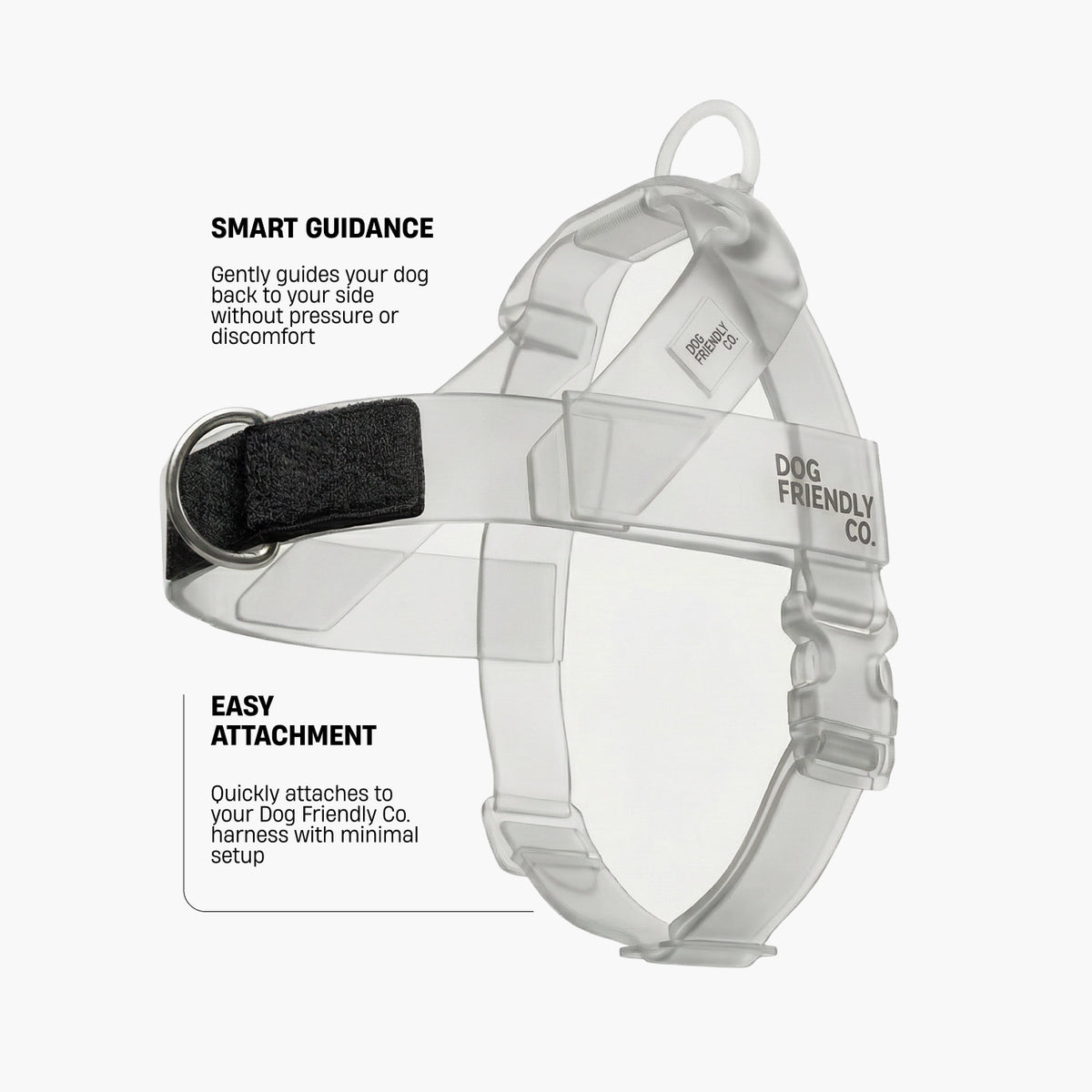
1. Adjust the chest strap
Loosen the chest strap so the harness sits slightly further back on your dog. The belly strap buckle should NOT touch or rest against the neck. See the photo below for the correct position.

2. Tighten the straps
Adjust the straps so the harness sits snugly around your dog — you should be able to fit two fingers between the harness and their body. If it’s sliding or moving around, tighten the adjustment straps a little more.
3. Final check before your walk
- The harness is sitting in the right position
- The neck strap isn’t too tight
- The buckle isn’t touching your dog’s front legs
- Two fingers fit comfortably underneath
- It feels secure without restricting movement
🎥 Watch our DFCO Harness Guide
Is Your Dog Pulling on the Leash?
If you're having trouble with pulling, you can also try our two-leash training technique using the DFCO Bungee Leash.
Two-Leash Training
You'll need:
- Your DFCO Bungee Leash
- Another leash
How it works:
- Attach one leash to the back D-ring
- Attach the second leash to the No-Pull front D-ring
- Walk your dog using both leashes
- Keep it up for a few days
- Once your dog is responding well, you can let go of the leash on the back D-ring
🎥 Watch the Leash Training Video
🎥 Watch how to attach the No-Pull D-ring